|
The Legned’s Journal ͏ ͏ ͏ ͏ ͏ ͏ ͏ ͏ ͏ ͏ ͏ ͏ ͏ ͏ ͏ ͏ ͏ ͏ ͏ ͏ ͏ ͏ ͏ ͏ ͏ ͏ ͏ ͏ ͏ ͏ ͏ ͏ ͏ ͏ ͏ ͏ ͏ ͏ ͏ ͏ ͏ ͏ ͏ ͏ ͏ ͏ ͏ ͏ ͏ ͏ ͏ ͏ ͏ ͏ ͏ ͏ ͏ ͏ ͏ ͏ ͏ ͏ ͏ ͏ ͏ ͏ ͏ ͏ ͏ ͏ ͏ ͏ ͏ ͏ ͏ ͏ ͏ ͏ ͏ ͏ ͏ ͏ ͏ ͏ ͏ ͏ ͏ ͏ ͏ ͏ ͏ ͏ ͏ ͏ ͏ ͏ ͏ ͏ ͏ ͏ ͏ ͏ ͏ ͏ ͏ ͏ ͏ ͏ ͏ ͏ ͏ ͏ ͏ ͏ ͏ ͏ ͏ ͏ ͏ ͏ ͏ ͏ ͏ ͏ ͏ ͏ ͏ ͏ ͏ ͏ ͏ ͏ ͏ ͏ ͏ ͏ ͏ ͏ ͏ ͏ ͏ ͏ ͏ ͏ ͏ ͏ ͏ ͏ ͏ ͏ ͏ ͏ ͏ ͏ ͏ ͏ ͏ ͏ ͏ ͏ ͏ ͏ ͏ ͏ ͏ ͏ ͏ ͏ ͏ ͏ ͏ ͏ ͏ ͏ ͏ ͏ ͏ ͏ ͏ ͏ ͏ ͏ ͏ ͏ ͏ ͏ ͏ ͏ ͏ ͏ ͏ ͏ ͏ ͏ ͏ ͏ ͏ ͏ ͏ ͏ ͏ ͏ ͏ ͏ ͏ ͏ ͏ ͏ ͏ ͏ ͏ ͏ ͏ ͏ ͏ ͏ ͏ ͏ ͏ ͏ ͏ ͏ ͏ ͏ ͏ ͏ ͏ ͏ ͏ ͏ ͏ ͏ ͏ ͏ ͏ ͏ ͏ ͏ ͏ ͏ ͏ ͏ ͏ ͏ ͏ ͏ ͏ ͏ ͏ ͏ ͏ ͏ ͏ ͏ ͏
|
Monthly Field Notes from Baja
|
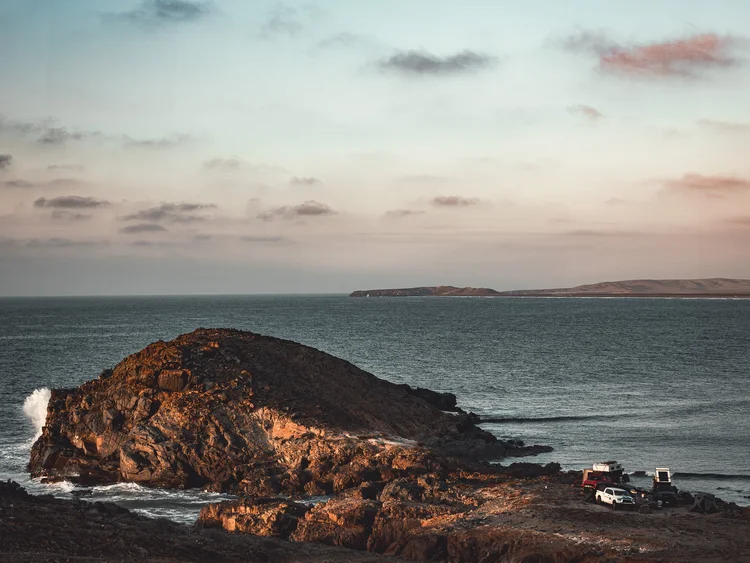
Dear Friends,Welcome back to The Legend’s Journal. If you found an old notebook in the glove box of a dusty truck somewhere in Baja, we like to think it would read a lot like this. Stories from the trail, gear that earned a place around camp, and Lullabies, Legends & Lies, the versions told at ranch tables and late fires, not the ones your professor wants footnoted. Guest writers will show up. Local artist Alejandro A. B. is drawing what the words cannot. Pour something good. Dust off the map. Cheers, Nathan W. Stuart August on the peninsula August was warm, but not as warm as I expected with every weather prophet running around with their hair on fire about El Niño. We had no problem staying cool on the Pacific side in Northern Baja but cross the peninsula to the Sea of Cortez and it’s toasty. Three quarters of the peninsula is floating in water above 80 degrees, and some spots are pushing 90. Sea life feels about a month behind this year. We will see if that holds. Whale sharks in Bahía de los Ángeles have unusually clear water, and the numbers look up. First rains of the season have started in the south. Monsoons in the north are putting some much-needed moisture into the sierras. Hurricanes are spinning out of southern Mexico like a game of Angry Birds firing at Baja. So far they have been missing. They are getting better every day. This winter’s El Niño is already the biggest on record. So the Baja prayer starts again: rain, please, but not all at once. We have one last trip in Northern Baja this September. After that we are in the south all winter, if you can even call it winter! Crime is not something I like to spend a lot of time on, since it does not pay. It is down. It is almost too quiet in Tijuana. Numbers across the peninsula have been falling since 2022, and these are the lowest we have seen in more than a decade. Whatever isolated incident you heard about does not represent the trend.
|
Nine miles in twelve hours!
|
|
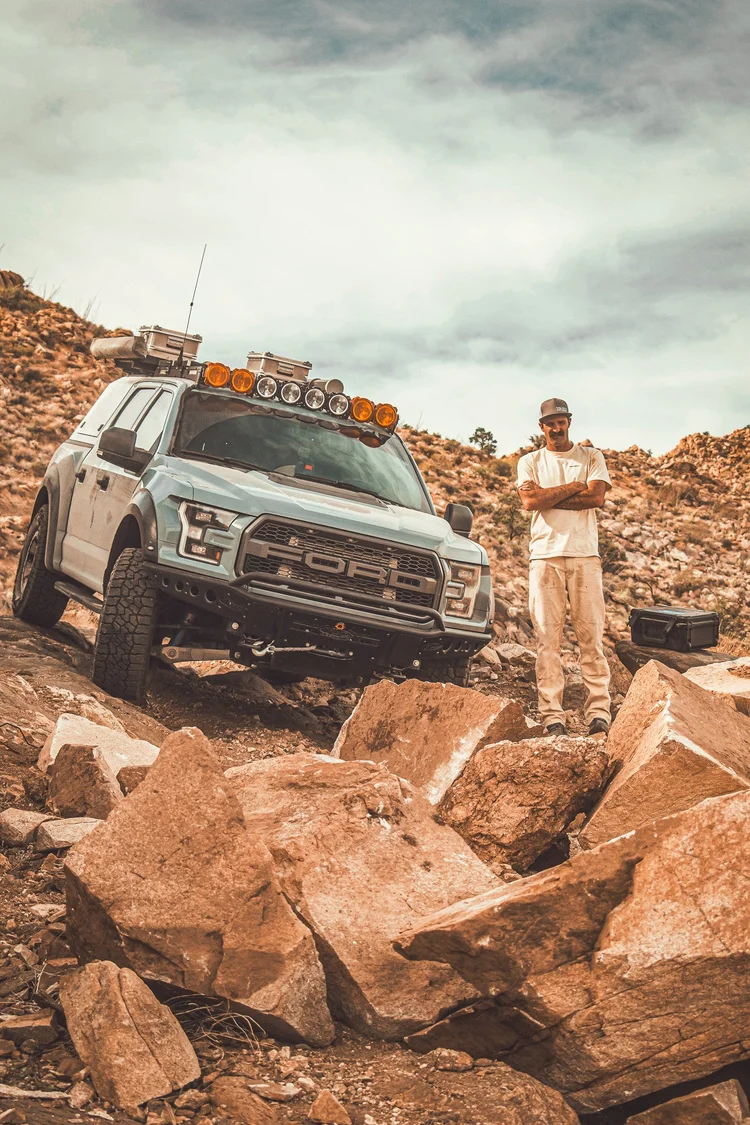
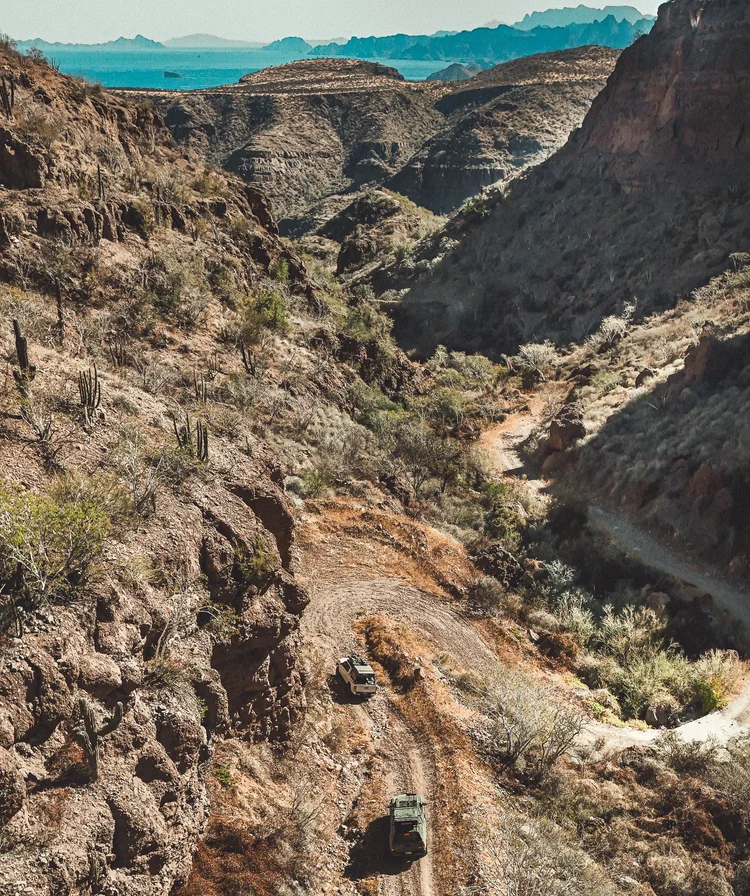
This is Cańon El Mano. The name comes from an old miner who settled at the bottom of a desolate canyon that now wears his name. Imagine being the first guy there, so they just name the place after you. What a legend. We know very little about Mano. He was already there when the next people showed up. The Molina family thought they had moved onto empty land and found a miner in the canyon. They say he arrived around the gold rush and never left. The Molinas started ranching cattle. Like a lot of ranches in the area, they ran the herd down on the desert in winter, using the fresh water that storms push out of the Sierra Juárez, then took them back up the mountain in summer for monsoon rain and cooler air. They built Molina de Abajo and Molina de Arriba. At that point only two roads dropped off the Sierra Juárez: San Matías and La Rumorosa. The Molinas had an in with CONAZA, the National Commission for Arid Zones, which approved a road to connect the upper and lower ranches. That was the mid-1970s, and probably the last time El Mano ever saw large machinery drive the entire road. Since then it has been used by local ranchers, the cartel, military convoys, off-road enthusiasts, and even SCORE. So it was my turn. I headed out with a good friend, Zorba, on the 15th of November 2021. Yes, he was named after the movie. Some sections I will run alone, but on a new road I try to have another truck or a copilot, preferably with a strong back for stacking rocks. By the time we left Ensenada, where we lived then, and got onto the trail, it was late. When it started getting rough we camped and saved the problems for daylight. We had started on top of the Sierra Juárez at about 5,000 feet, with a little over 2,000 feet to drop in the next four miles. Waiting for morning still feels like the right call. Bright and early we rolled out with camp coffee and hope. The coffee helped. The road was steep, narrow, and full of rock debris. The hope died after the second bend.
|
|
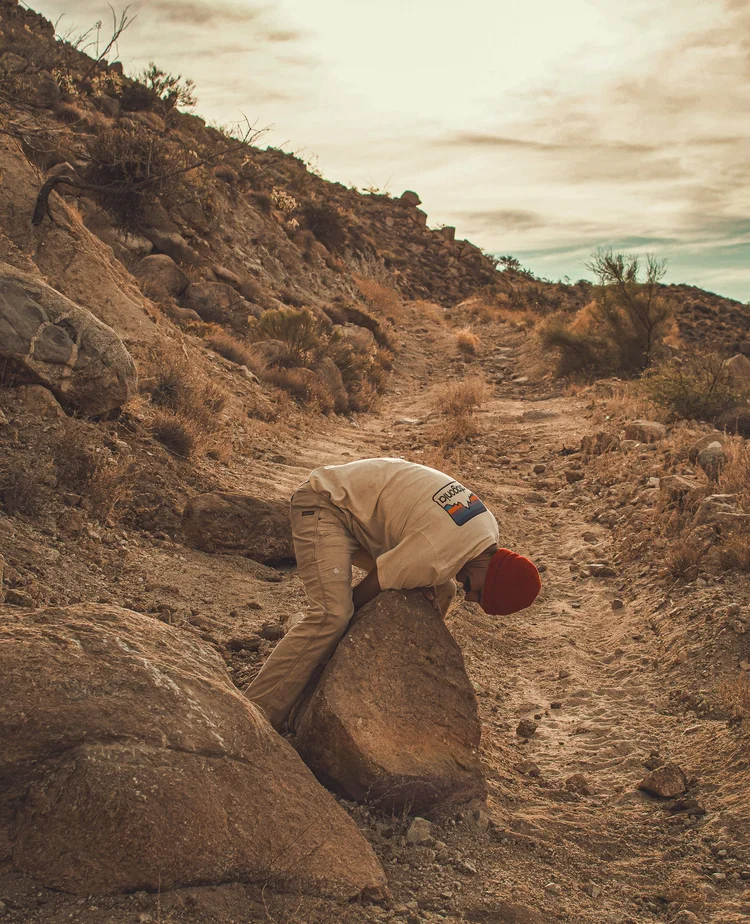
That picture is what we hit at least five times over the next nine miles and twelve hours of road work on the steep grade down to the old ranch at El Mano. The first slide looked impossible. We had time, and I had Zorba’s back, so we got inventive. Sometimes we used the winch and a snatch block to pull rocks if we could find an anchor. The deadman came in handy more than once. Other times we used the stock scissor jack from the truck, lifting the rocks off the road one inch at a time. If they were small enough, we rolled them between the two of us. Every time we cleared a section we patted each other on the back, hopped in the truck, turned on the A/C, drove a thousand yards around the corner, and found another slide. Close to dark we called it and camped on a lava flow near the desert floor. We were not the first. We did not build this road. We had never cleared one before that day. We just fell into a Baja tradition that plays out all over this peninsula. A lot of remote roads down here are never maintained by anyone official. They stay open because random people move rock for their own reasons. If you drove that road in the months after us, you owe me and Zorba a beer. We owe the same to everyone who kept these tracks alive before we got there.
|
|
Got a trail moment of your own from a Legends trip? Hit reply, we read every one, and the best make it into a future dispatch.
|
Falken, The Tire I Had To Come Back To
|
|
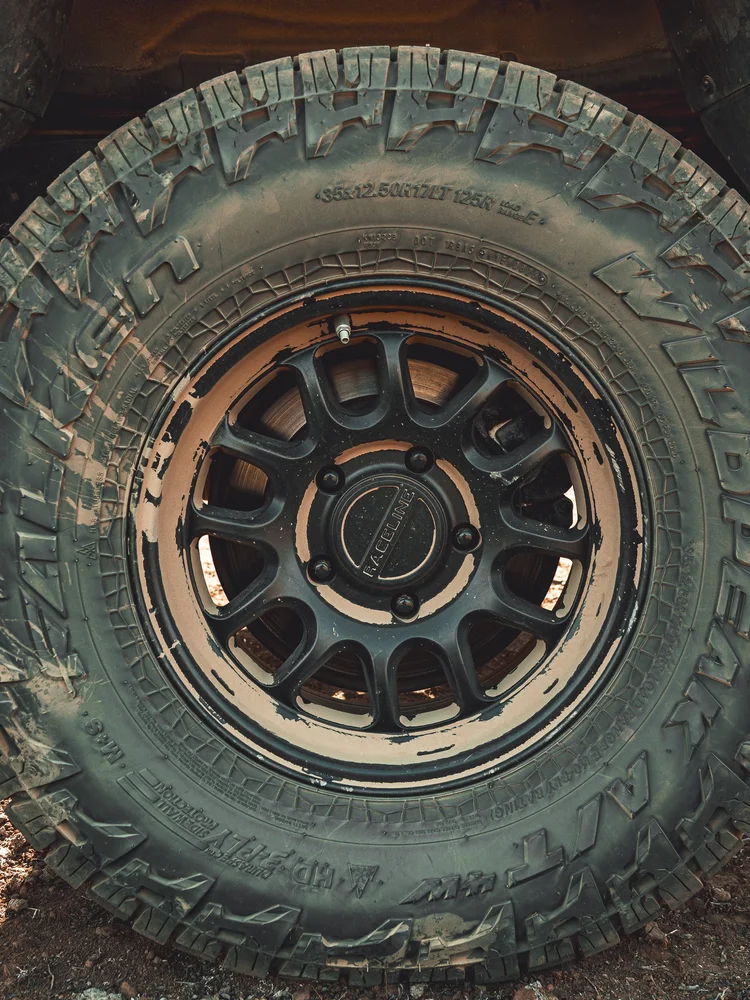
Price: $380-$395 FALKEN WILDPEAK A/T4W All-Terrain Tire for Jeeps, 4x4 SUVs & Trucks in 35X12.5R17LT With Legends Overlanding I have run a lot of tires in Baja. I started on Falken, switched to BFG Mud-Terrain last year, and came running back to Falken this year. Here is why the Wildpeak A/T4W is what I was looking for all along. What do we really do with our tires? Most of the time we are on the highway, getting to the turnoff. Then we drop onto razor volcanic rock and cactus. That mix is the whole job. On the highway we loved the Wildpeak A/T3W. After a year and 20,000 miles in Baja I still had another 20,000 miles of tread left. I also had eleven sidewall plugs. Eleven. One cactus after another. The A/T3W could not keep up with the road-less-traveled mindset. So I switched to BFG M/T. The worry went away. So did the quiet. Extra tread turning the highway into a drum machine. Soft rubber that grips off-road disappearing before my eyes. More than ten pounds extra per tire burning through the tank and the wallet. Time for an adult decision at forty-five. The A/T4W is the middle I wanted. Not the lightest tire. I asked for sidewall and I got it, even if the extra weight still hits the wallet. Falken only puts 3-ply DURASPEC construction on select sizes. Look for the DURASPEC stamp. That extra ply is what I needed for Baja’s sharp stuff. It still rides like a Falken on the highway, so I am back to my regular Louis L’Amour audiobooks. When I do finally get off the pavement and every living plant starts poking me, it is nice to know I have the extra sidewall. Four thousand miles in, my GlueTread bag has only been opened for customers. We do not ask for much on these trips as far as vehicle modifications. We had a RAV4 on three wheels last month, so who is to say what can or cannot make it. If you bring your own rig, we strongly suggest good tires. If you are shopping, these get two thumbs up. Years Tested: .5 Would We Buy It Again? Yes
|
|
LULLABIES, LEGENDS & LIES
|
The Legends of El Mechudo
|
|
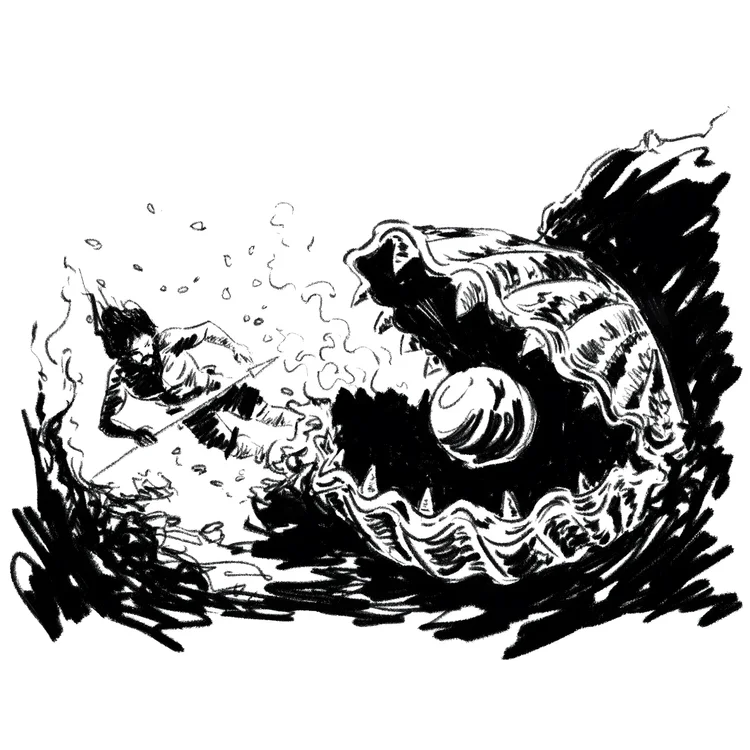
The Legend of El Mechudo has been told to me several ways, so I had to do a little more research for this one. What did I come up with? More versions of the story. So let’s backtrack to the facts before we get out on the thin ice where legends live. El Mechudo means the long-haired one. He was a Yaqui pearl diver from Sonora, famous now for a last dive that never ended. La Paz and the Sea of Cortez had a thriving pearl operation on a world scale through the late 1800s and early 1900s. In 1893 the British firm La Mangara took a huge concession over those beds and worked them with diving suits, dynamite, and Yaqui labor until the Revolution canceled the license in 1912. Whether the company finished the beds on its own or had help from rumored Japanese tactics is a story for another day. What the fishery did produce was real enough. A giant pearl from these waters, El Gran Limón, was placed in the English crown of Edward VII and stayed in the English crown for more than a century. Queen Elizabeth II even came to La Paz in 1983 to see where the big pearl in the family heirloom had come from. By the mid to late 1800s, disease and starvation had wiped out most of the native people on the peninsula, an unforeseen but non the less deadly result of the Spanish church settling the region. Boat owners needed divers and found them in Sonora. The Yaqui Indians were famous for diving more than ten fathoms and staying down more than two minutes. Spanish influence left the crews more or less Catholic. What held among the pearling crews was the custom. The last dive of the day, or of the season, belonged to the Virgin, a prayer for safety in a job that regularly killed men. That custom is the hinge. The story goes that this guy was pretty hot stuff, diving deep and producing a lot of money for the men who owned the boats. The line between owner and boss was a little blurred. One day, on El Mechudo’s last dive, he sees a very large oyster. It is the end of the day and he is tired. In some versions he comes up and tells the captain the oyster is huge, it is deep, and the current is strong. The captain threatens him and orders him back down. Human life was cheap. Most versions say that instead of dedicating the pearl to the Virgin, he dedicated it to the Devil. Then he dove and never surfaced. Though I am a big believer in traditions and a little superstitious (you will not find me with a banana on a fishing boat) I think this story probably played out many times with Yaqui divers forced past their limits so the rich man could get richer. It has less to do with skipping the offering to the Virgin. Then again, the Devil does have a pretty bad reputation. When he did not come up, some tellings say his fellow divers went after him and found him trapped, an arm inside a giant oyster, clutching what would have been El Gran Limón 2.0. Other versions say nobody went. He had cursed himself. Either way, some fishermen still avoid Punta El Mechudo. Locals will tell you his body turns up in nets, his face appears just below the surface, and he even walks the hills behind the point. People mention a La Paz newspaper in 1897. Nobody can produce the clipping. If you are ever in a boat north of La Paz and your captain will not ease closer to a stretch of coastline, check your map. You might be too close to El Mechudo’s point, but more than likely you are just with a captain who does not listen to anything you say happens to me all the time!
|
Almost an Island
October 11–16, 2026
|
Southern Baja Cape Overlanding Adventure
|
|
We call this trip Almost an Island because we will be exploring the rugged coastline at the very southern tip of the Baja Peninsula. There is a reason nearly ninety percent of visitors to this region fly in and never go anywhere once they land. It takes roughly twenty hours to drive here from the border, and most people solve that problem by checking into an all-inclusive resort and staying put. Fair enough. But it also means most of Southern Baja might as well be an island. This six-day, off-the-pavement expedition starts and ends in Cabo and takes you far beyond the resort zone. Traveling through remote sierras, turquoise waters, and rugged coastlines, this all-inclusive journey is designed for those who want real overland travel without sacrificing comfort. Expect challenging terrain, chef-driven meals, and long days exploring places most visitors never see. Flying in and pairing that with a properly equipped four-wheel-drive overland rig opens access to one of the least explored regions in Southern Baja. Quiet backcountry, dramatic coastlines, and landscapes that exist well beyond the infinity pool. October is a transition month. The water is still warm, the air temperatures finally begin to ease, and conditions are ideal for exploring both the mountains and the coast. It is one of the best times of year to experience the very best of Southern Baja.
|
|
No rig of your own? No problem. We offer fully equipped 4x4 overland rentals for all of our adventures. Contact us for availability and details.
|
|
|
|